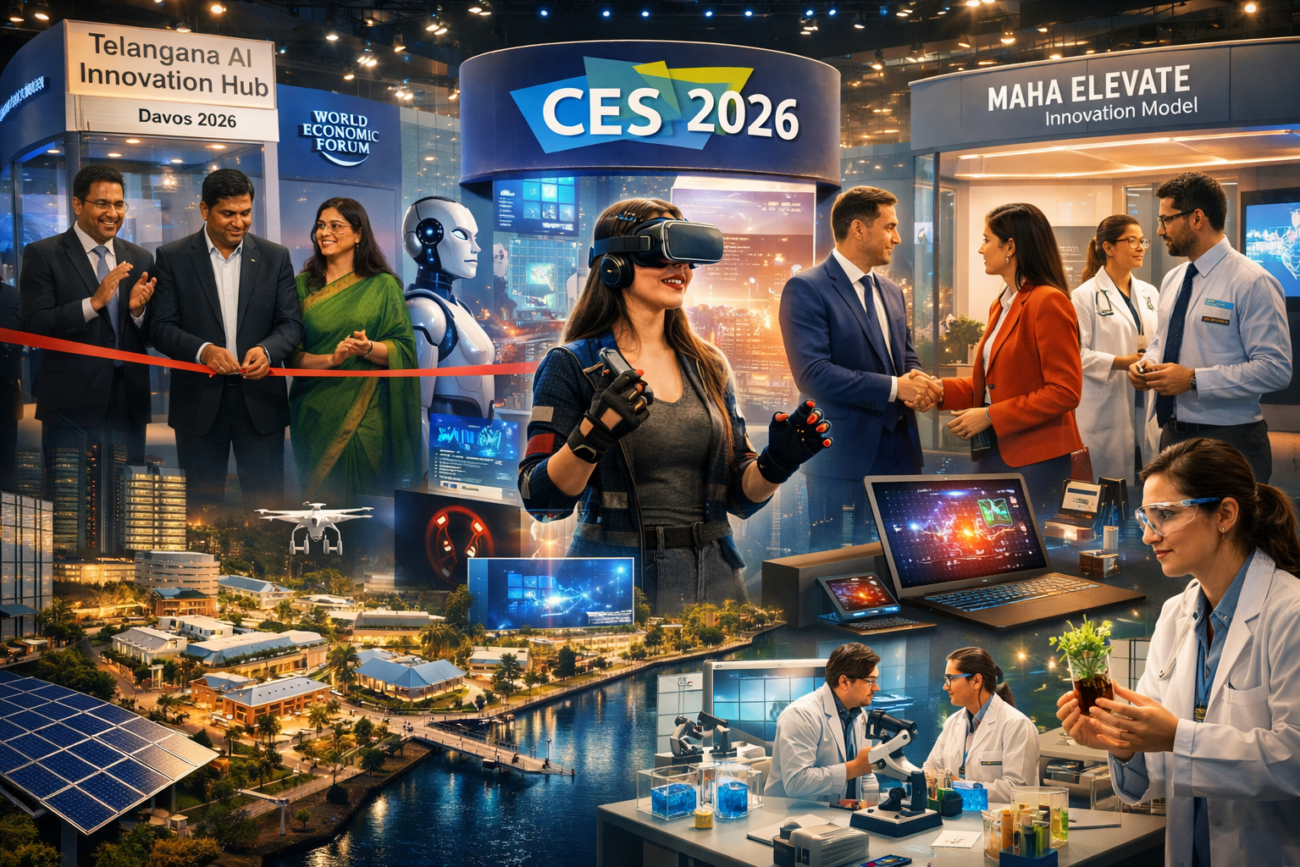
In 2026, innovation continues to accelerate across industries, redefining how we live, work, and envision the future. One major development on the global stage is the launch of the Telangana AI Innovation Hub at the World Economic Forum in Davos, aiming to transform AI research into real-world, scalable solutions and position the region as a global leader in deep-tech innovation.
A surge in multimodal artificial intelligence technology is also reshaping markets, making powerful AI tools more accessible to businesses of all sizes and driving adoption of AI-as-a-Service offerings that support automation, decision making, and new product creation.
Innovation isn’t limited to software; hardware breakthroughs showcased at prominent tech events like CES 2026 spotlight cutting-edge products — from advanced gaming systems to next-generation processors and smart devices — underpinning rapid evolution in computing and consumer technologies.
Corporate leadership in innovation continues to strengthen as well, with companies such as ACI Worldwide appointing new chief innovation leaders to drive technology strategy and digital transformation at scale.
However, not all innovation buzz is without debate. New models aimed at transforming health and wellness sectors, such as CMS’s MAHA ELEVATE innovation model, have attracted scrutiny for potential gaps in scientific rigor, reminding us that innovation must balance novelty with evidence and impact.
On the ground, cities and regions are planning innovation-centric economic growth through initiatives like the St. Pete Innovation District’s master plan, which aims to cultivate ecosystems that blend research, business, and community development.
Finally, particular sectors such as sustainability and biotech are evolving through dedicated accelerators and research programs that target eco-friendly solutions and transformative health technologies, highlighting how innovation strategies increasingly intersect with global challenges.
In sum, 2026 is shaping up as a year where innovation not only advances technology but also redefines how regions, industries, and policies collaborate to build resilient, forward-looking systems that promise economic growth and societal progress.
